AI-generated illustration — not a retailer product photo.
How to Decide Whether a UK Voucher Is Actually Worth Using
A voucher can make a basket feel cheaper before it actually is. The code box accepts SAVE10, the total drops by a few pounds, and the checkout starts to look like a win. Then delivery appears, the discount excludes the item you wanted, the return would cost money, or the voucher pushes you into buying a second product that was never on your list.
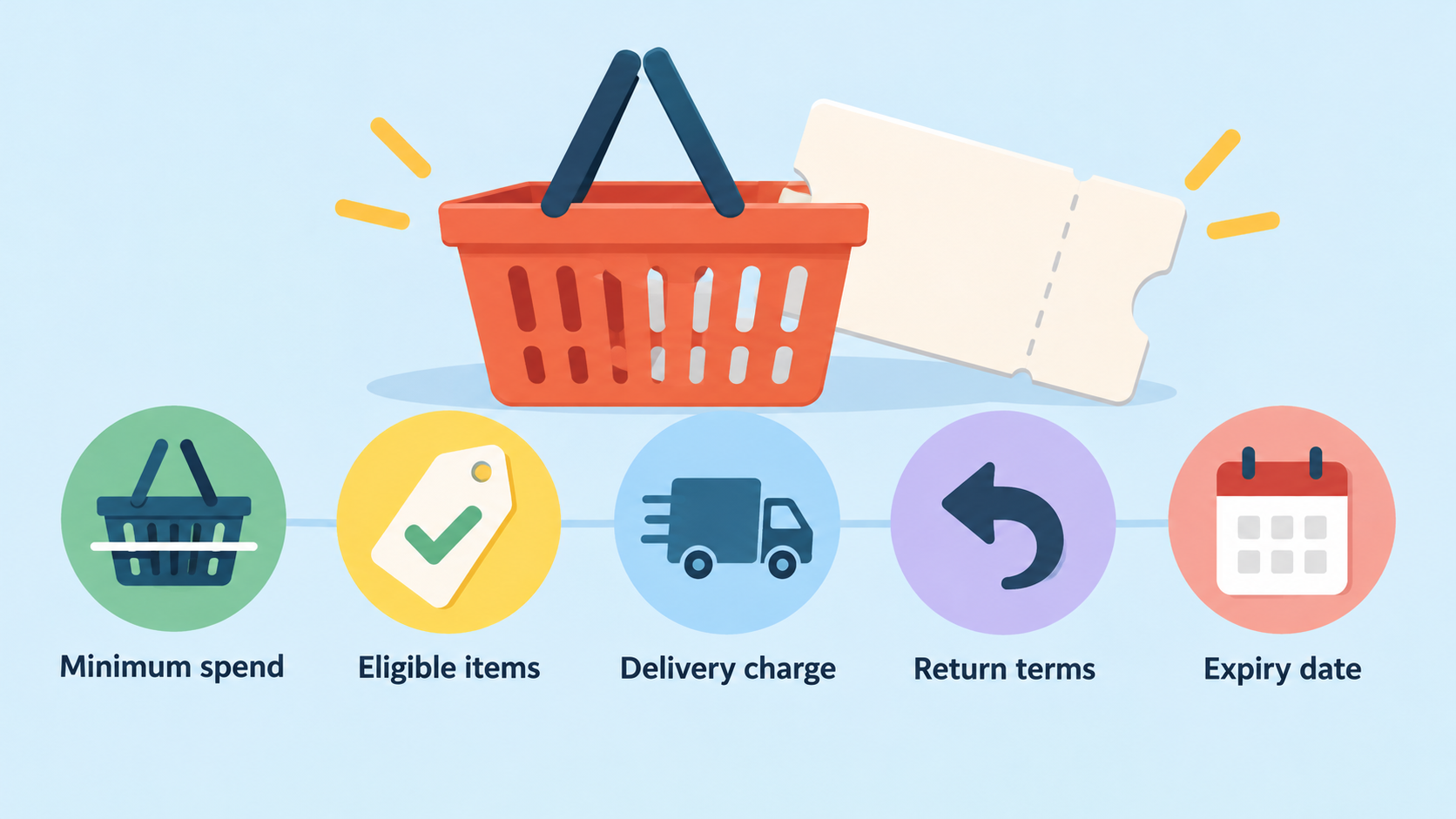
The practical test is simple: a UK voucher is worth using only when the net saving survives the full checkout. That means checking the minimum spend, eligible items, delivery charge, return terms, expiry date, and the product's normal price before treating the code as a saving.
This guide is written for UK shoppers comparing voucher codes, gift cards, reward vouchers, loyalty prices, and checkout promotions. It is not a live code list. Verification date: 10 July 2026. Retailer terms can change quickly, so always check the retailer page before paying. Our editorial standards are explained in our editorial policy, and you can read more about the site on our about page.
Start with the net basket, not the headline discount
AI-generated illustration — not a retailer product photo.
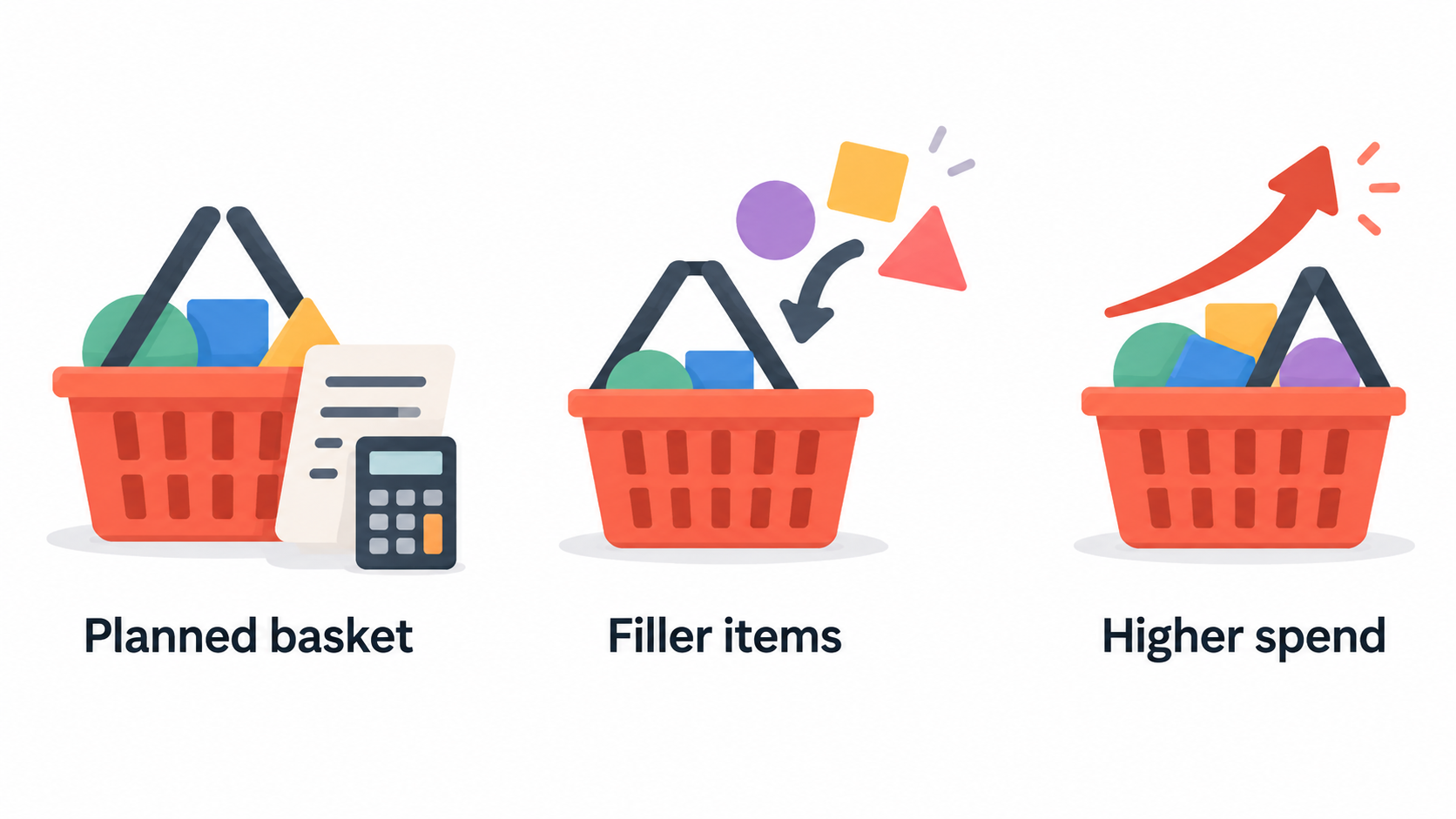
The first number to calculate is not the voucher percentage. It is the amount you would pay without changing your buying plan.
If a code gives £10 off a £60 spend, it is only a £10 saving when your planned basket was already £60 or more. If your real basket was £42 and you add £18 of filler items to trigger the code, the voucher has not saved £10. It has encouraged an £8 higher spend before delivery and return risk are even considered.
Use this quick calculation:
| Check | What to write down |
|---|---|
| Planned basket | The items you meant to buy before seeing the voucher |
| Voucher basket | The items needed to qualify for the code |
| Delivery | Standard, click and collect, express, or large-item charge |
| Return cost | Any collection, postage, or restocking cost if you change your mind |
| Price context | Whether the item is normally sold near this price |
A voucher is usually worth using when the final checkout is lower than your planned basket and the extra conditions do not create a new cost. It is weaker when the code works only after you add unrelated items, choose a paid delivery option, or accept a worse return route.
Check minimum spend and excluded items before building the basket
AI-generated illustration — not a retailer product photo.
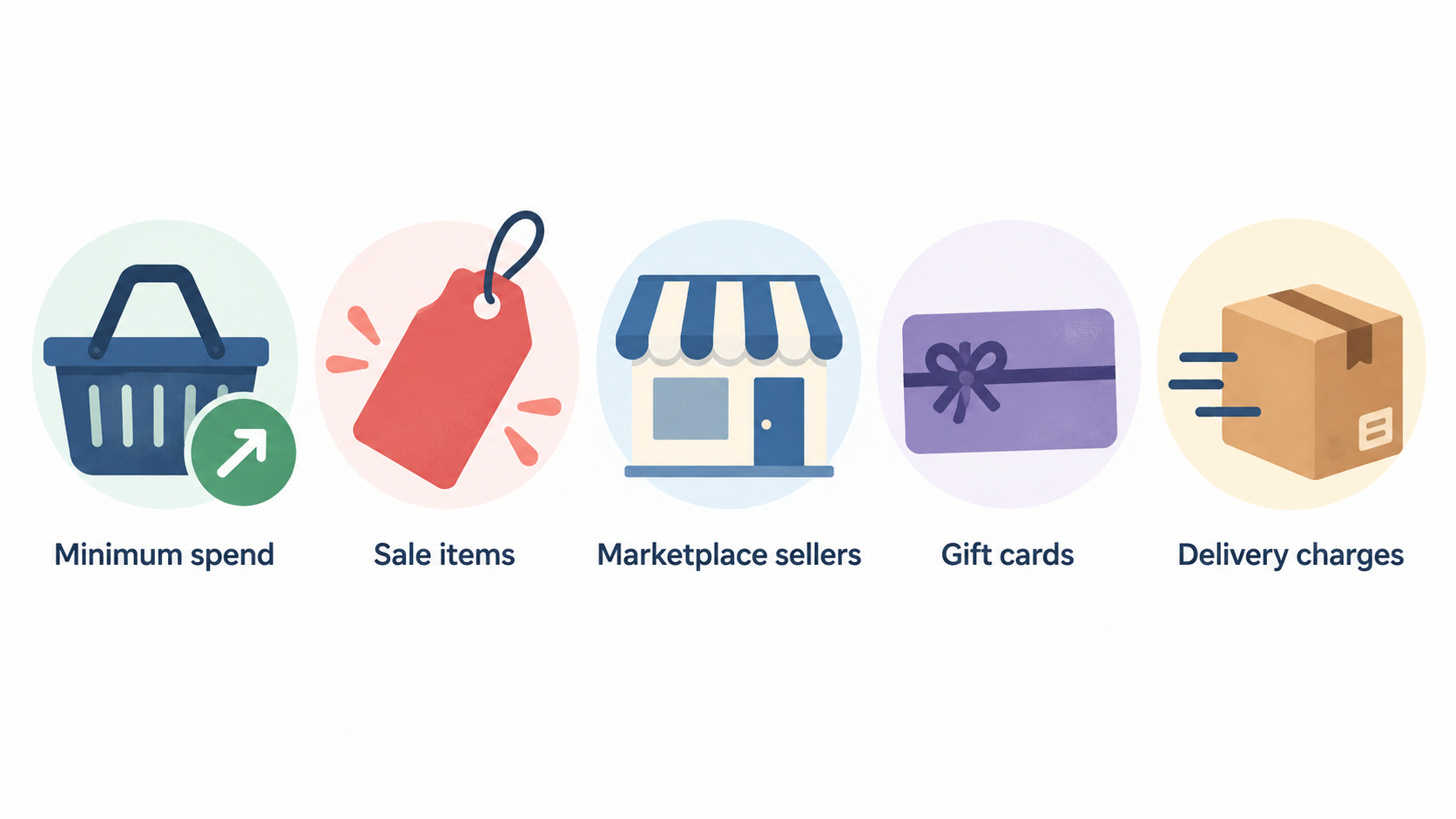
Most weak vouchers fail on eligibility. The code might exclude sale items, marketplace sellers, gift cards, delivery charges, subscriptions, finance products, personalised goods, clearance stock, or specific brands. In fashion and beauty, codes often exclude premium labels. In electricals, they may exclude Apple, games consoles, warranties, installation, recycling, or third-party seller items.
Do not build the basket first and hope the code applies at the end. Find the voucher terms first and answer four questions:
- Does the minimum spend apply before or after delivery?
- Does the code apply to sale items or only full-price items?
- Are the products sold directly by the retailer or by a partner seller?
- Can the voucher be combined with student, NHS, newsletter, loyalty, or cashback offers?
If the terms are vague, treat the voucher as uncertain until the checkout proves it. A discount that works on only one colour, size, seller, or product group can still be useful, but it should not steer the whole purchase unless that item was already the right choice.
Add delivery and collection costs to the saving
AI-generated illustration — not a retailer product photo.
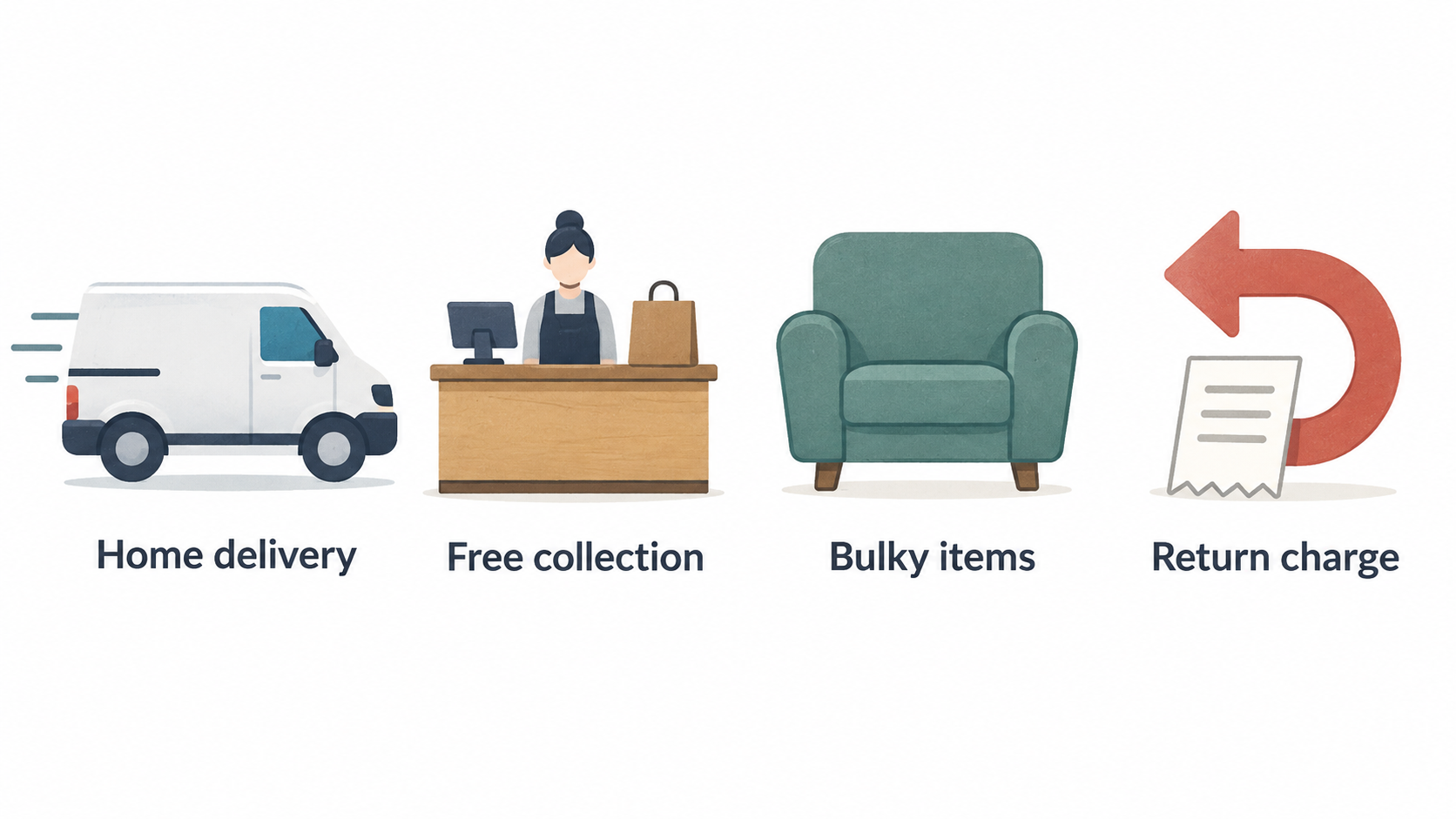
Delivery is where a headline voucher often loses value. A £5 code is poor if it turns free collection into £4.95 home delivery. A 10% code is weaker if the item is bulky and requires a collection or return charge later.
Retailers vary by category and order size. Argos, for example, shows delivery and return details that can materially change the final cost: its help pages list small-item delivery, large-item delivery, free delivery thresholds for eligible small items, and collection charges for some returns. That does not make the retailer poor value; it means the voucher needs to be judged against the actual fulfilment route, not the first discounted subtotal.
For small orders, click and collect can make a modest voucher worthwhile if it avoids delivery. For heavy items, furniture, appliances, or home delivery from a supplier, the delivery and return route may matter more than the discount code. If the voucher saves £12 but a failed fit would require a £30 collection charge, the risk is different from a small item that can be returned free in store.
Before paying, compare these versions of the same basket:
| Basket version | When it matters |
|---|---|
| Standard delivery | Useful for most non-urgent orders |
| Click and collect | Useful when it removes delivery cost |
| Express delivery | Only worth it if timing has real value |
| Large-item delivery | Needs return and collection risk checked |
| Partner/supplier delivery | Check whether the normal retailer return route still applies |
The voucher is worth more when it works with the cheapest practical delivery option. It is worth less when it forces a faster, paid, or less flexible route.
Treat gift cards, reward vouchers, and promo codes differently
A promo code reduces the checkout price. A gift card is stored value. A reward voucher may have separate rules from both. Mixing them up leads to poor decisions.
Gift cards and vouchers often differ on expiry, exclusions, and refunds. John Lewis says its gift cards are valid for 24 months from purchase or last use, while its older Partnership gift vouchers have no expiry date, with exclusions and online redemption rules still applying. That distinction matters. A £50 gift card that expires soon is not the same as a £50 discount code. A voucher with no cash alternative is also not the same as money in your bank account.
When judging a gift card or reward voucher, check:
- expiry date and whether balance checks reset it;
- whether part-used balance remains for future orders;
- whether refunds go back to the original voucher, gift card, or a new e-gift card;
- whether excluded categories include stamps, tobacco, prescriptions, financial products, concessions, restaurants, or marketplace sellers;
- whether the voucher can be used online, in store, by phone, or only in one channel.
A gift card can be worth face value if you already shop at that retailer, the expiry is comfortable, and the exclusions do not block your normal purchases. It is worth less than face value if it locks you into a retailer you would not otherwise choose.
Price-check the item before trusting the saving
A voucher can be genuine and still not be the cheapest route. The item may be lower elsewhere without a code. A sale price may have been available for weeks. A loyalty price may look strong because the non-member price is high. A bundle may hide a weak unit price.
For everyday goods, compare the unit price where possible. For beauty, health, home, electricals, toys, and clothing, compare the exact model, size, shade, colour, warranty, delivery date, and return route. For appliances and furniture, check whether installation, recycling, removal, or delivery to room is included.
Price context is especially important when the voucher is percentage-based. Ten percent off a product that is £20 more expensive than a competitor is not a saving. A £15 voucher on a retailer-exclusive bundle can still be fair, but you need to compare the nearest equivalent rather than the marketing claim.
The cleanest rule is this: if you would not buy the item at the current retailer without the voucher, the code needs extra scrutiny. It may still win after delivery, returns, loyalty points, warranty, or collection convenience, but the voucher should not be the only reason.
Check returns before using a voucher on uncertain items
Returns matter most when size, fit, colour, compatibility, installation, or warranty is uncertain. A voucher on shoes, clothing, cosmetics, furniture, phones, laptops, appliances, mattresses, or personalised gifts should be judged alongside the return policy.
UK distance-selling rules give consumers cancellation rights for many online purchases, but there are exceptions, and retailers can set process details around return routes and charges. GOV.UK guidance says sellers must provide delivery costs and cancellation information before an order is placed, and that customers generally need to be told they can cancel up to 14 days after delivery. That is a baseline; the practical experience still depends on the retailer's own route, item condition rules, collection costs, and excluded categories.
Ask these questions before using a voucher on a risky purchase:
- Can the item be returned if opened, tried on, assembled, or installed?
- Does the retailer refund the standard delivery charge if the full order is returned?
- Will the refund return to your card, gift card, reward voucher, or store credit?
- Are return postage or collection charges deducted?
- Does using the voucher make the order non-refundable or change the refund method?
A voucher is more attractive when the return route is simple and low-cost. It is less attractive when the item is hard to inspect, expensive to send back, or likely to be excluded once opened.
Know when to buy now, wait, or skip the code
A UK voucher is worth using now when three things are true: you already planned to buy the item, the net basket is lower after delivery, and the return or expiry terms do not create a hidden downside.
Wait when the item is seasonal, regularly discounted, or likely to enter a predictable sale window. Clothing, bedding, beauty sets, toys, garden furniture, and older electricals often move through promotion cycles. If the voucher is small and the item is not urgent, a broader sale may beat the code later. Waiting is also sensible when a code excludes the exact item you want but the retailer often runs category-wide promotions.
Skip the code when it changes your behaviour in a way that costs more. Common examples include adding filler items, accepting a poor return route, buying a bigger size or bundle you do not need, joining a paid membership for one order, or using a gift card before checking expiry and exclusions.
The aim is not to reject every voucher. It is to use vouchers only when they support the purchase you were already comfortable making.
Internal reading guide
For more UK deal checks, start with our guides hub and compare current retailer coverage in deals and brand notes. Our about page explains the site's consumer savings focus, and our editorial policy explains how we separate practical shopping guidance from affiliate incentives.
FAQ
Is a 10% UK voucher always worth using?
No. A 10% voucher is useful only if the item is fairly priced before the code and the saving is not cancelled by delivery, return costs, or extra spend. On a £40 item with £4.95 delivery, a 10% code saves £4 before delivery, so click and collect or a different retailer could matter more.
Should I add extra items to reach a voucher minimum spend?
Only if those extra items were already on your list. If a £50 minimum spend makes you add £12 of filler to unlock £5 off, you have spent more, not saved. A minimum-spend voucher works best for planned baskets, repeat essentials, or multi-item orders where every item has a clear use.
Are gift cards the same as voucher codes?
No. A voucher code normally reduces the checkout price, while a gift card is stored value tied to a retailer. Gift cards may have expiry rules, balance rules, category exclusions, and refund restrictions. Treat a gift card like retailer credit, not like cash, unless you regularly shop there and understand the terms.
What should I check before using a voucher on clothes or shoes?
Check whether sale items are included, whether the size or colour qualifies, and how returns work. For fit-sensitive items, a small code is not enough if return postage is deducted or exchanges are awkward. The stronger voucher is the one that still leaves you with a simple return route.
Can a voucher make a bad price look good?
Yes. A code can make an inflated, old, or non-competitive price look attractive. Compare the exact product elsewhere before paying, including model number, size, delivery, warranty, and returns. If another retailer is cheaper without a code, the voucher is just decoration.
When should I ignore a voucher and buy anyway?
Ignore the voucher hunt when the item is urgent, stock is limited, or the cost of delay is higher than the possible saving. Replacement appliances, essential travel items, school kit, and time-sensitive gifts can justify buying without a code if the retailer, delivery date, and return route are right.
Sources checked
- GOV.UK: Online and distance selling
- Argos: Returns, product support and repairs
- John Lewis: Gift Cards & vouchers
A voucher is useful when it makes a good purchase cheaper. It is not useful when it makes an unnecessary purchase feel justified. Check the final basket, read the terms, compare the price, and treat the code as the last step rather than the reason to buy.
Editorial information: Read our affiliate disclosure.